01
RAID that remains owned
Track risks, assumptions, issues, and dependencies per project. Stale items surface when they go too long without an owner update instead of disappearing into a status deck.
Leadership & Performance
RAID, decision rights, manager roll-up, 1:1 preparation, skip-level visibility, weekly status, workgroups, and interface contracts share the same operating context as projects, quality, people, and goals.
Read-only demo · no signup · realistic management and delivery records
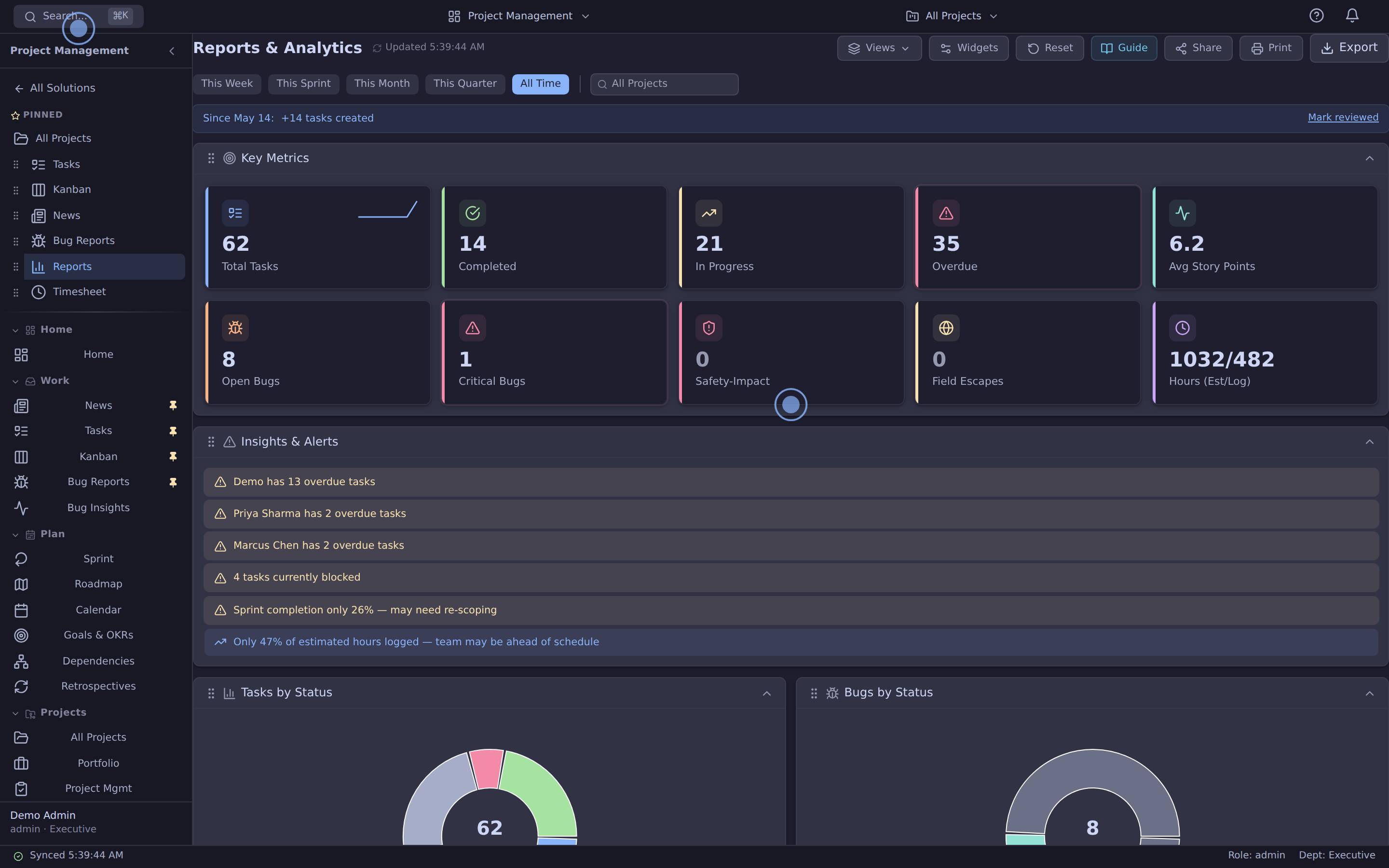
Structured management work
Risks, decisions, manager signals, and weekly status should not live in unrelated spreadsheets and meeting pages. Azora turns them into records that can stay linked to tasks, goals, teams, and evidence.
01
Track risks, assumptions, issues, and dependencies per project. Stale items surface when they go too long without an owner update instead of disappearing into a status deck.
02
Record who can approve what and at which threshold, then reference that authority from the workflows where decisions actually happen.
03
See reports’ active work, blockers, leave, and management cadence through the same org graph.
04
Bring recent status, overdue work, commitments, and prior notes into the conversation.
05
Maintain a separate cadence, agenda, and decision history without bypassing delegated authority.
06
Capture shipped, in-progress, blocked, and asks-for-help as queryable records that roll up across teams.
Connected management cadence
A blocked commitment can surface in weekly status, become a RAID item, enter a 1:1, and resolve through a recorded decision while preserving the work and people involved.
Weekly status and delivery data show what shipped, what slipped, and where help is required.
Record the risk, issue, dependency, owner, due date, and escalation path.
Use decision rights, 1:1s, skip-levels, or a cross-functional workgroup without losing the source context.
Keep the decision, commitment, project work, and follow-through connected.
Across team boundaries
Cross-functional work fails at the seams. Workgroups, interface contracts, and dependency views make those seams explicit enough to manage.
01
Create cross-functional teams for a defined outcome, give them a planned end, and keep their members and delivery context visible.
02
Record producer and consumer expectations, deliverables, dates, owners, version, and lifecycle from proposal through supersession.
03
See which team deliverables block others and expose a slipped date from both sides of the interface.
04
Compare stakeholder importance and effort to surface quick wins and low-impact traps.
05
Capture ratings, risks, commitments, and synthesis as structured records tied to the follow-up work.
06
Persist snapshots of key operating metrics so leadership can see where the organization moved.
“We had RAID in a wiki, decision rights in a sheet, and 1:1 notes in a separate page for every manager. Structured records beside the work reduced the effort of keeping the management layer current.”
Review the current platform offering and talk through your team size, configuration and onboarding needs. View platform pricing.
See it before you talk to sales
Open the read-only demo now. When you are ready, request a seeded tenant for your team and connect the cadence to the work it governs.