01
For the teammate
Bring the relevant task or document into the discussion so others can follow the context.
Collaboration
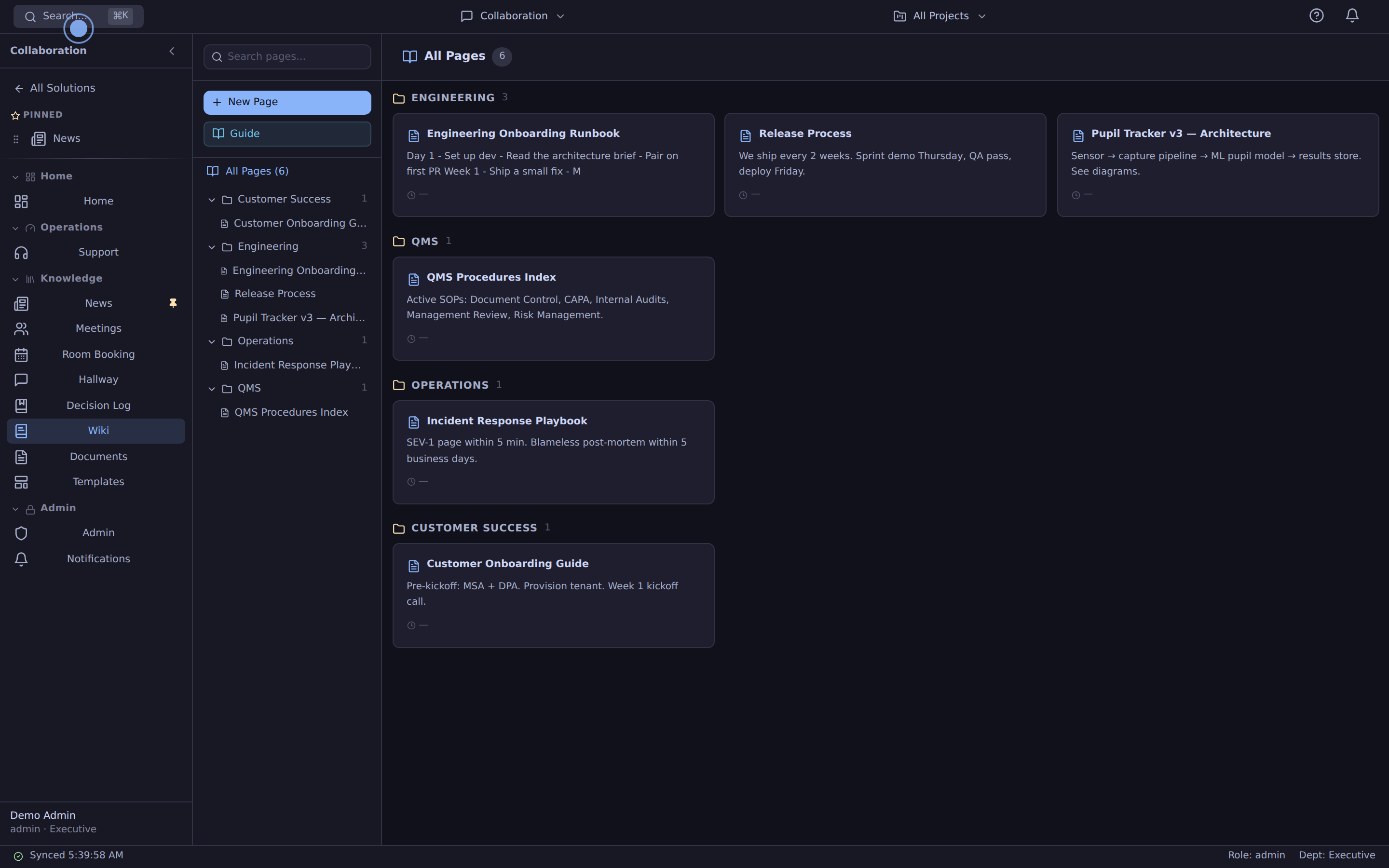
Bring team messages, meeting actions, shared knowledge and decisions into one platform, with references to the work people are discussing.
Built for teams turning everyday conversations into shared decisions and follow-up.
Interactive sample · no signup · fictional records
Clarity for the team
Give teammates a place to find the discussion, understand the decision and see who owns the next step.
Bring the relevant task or document into the discussion so others can follow the context.
Keep the agenda, decision and agreed actions available for the next conversation.
Find the shared notes and related work behind the request you are picking up.
A connected workflow
Capture the context, agree the next step and return to the work with the people responsible.
Start a discussion with the relevant work or document reference.
At the handoffOthers can see what the conversation concerns.
Use the conversation or meeting to clarify the decision and responsibility.
At the handoffThe next owner gets a useful brief.
Follow the task or meeting action with its supporting notes close at hand.
At the handoffThe team can return to the action being worked on.
Review the previous decision, open actions and relevant records in the next conversation.
At the handoffThe next discussion starts with shared context.
Use native channels and direct messages, with supported task, unit and document references.
Organize shared knowledge, versioned documents and reusable templates alongside your team’s work.
Record the decision and its context so the team can return to the reasoning.
Prepare agendas, follow meeting actions and coordinate room bookings with conflict checks.
Keep customer support records and related bug follow-up in the same platform.
Use supported record links to connect a discussion or document to the work it concerns.
Bring this to your walkthrough
Choose a typical team discussion and the task or document it concerns. We can explore the references, actions and access each person needs.
Connected by design
Project, quality, Operations, HR and controlled-document solutions are included in one platform plan. Evaluate the records, roles and handoffs your team needs to bring together.
Keep the brief and related work close to the person picking up the action.
Return to the agenda, agreed decisions and named actions.
Use controlled documents for formal approvals and the Library for working knowledge.
Shared context for the next conversation
See how the wider Azora platform connects the work your team shares.
A walkthrough shaped around your work
Explore a sample connected story or request a walkthrough around how your team shares and follows up on work.
Browse all nine solutions →